Economic

Image
and Operational Efficiency

Economic and Operational Efficiency in the context of a Quantum Intelligent Futuristic City Management System encompasses strategies and technologies aimed at optimizing resource utilization, reducing costs, and enhancing the overall functionality of urban systems.

Image

Key aspects and capabilities of our system.

Image
1. Data-Driven Decision Making: Utilizing data analytics and AI to make informed decisions that optimize resource allocation, reduce waste, and improve service delivery, leading to cost savings and operational improvements.

Image
Here are the wide conceptual diagrams visualizing Data-Driven Decision Making for Economic and Operational Efficiency, especially in the context of a Quantum Intelligent Futuristic City Management System. These diagrams depict a futuristic cityscape, highlighting the role of data in driving economic and operational decisions. The designs include elements such as advanced data analytics centers, real-time monitoring systems, and integrated economic models. These systems are key components of the city's infrastructure, utilizing vast amounts of data to optimize resource allocation, streamline processes, and enhance service delivery. The use of predictive analytics, AI algorithms, and big data processing in making informed, efficient, and cost-effective decisions is highlighted. The impact of data-driven decision making on improving the city's economic performance and operational efficiency is emphasized. The overall design conveys a city that leverages cutting-edge technology and data insights to drive its economic growth and operational excellence.
Image
2. Smart Resource Management: Implementing IoT and smart technologies to manage resources like energy, water, and waste more efficiently. This includes smart grids, intelligent water systems, and waste management solutions that minimize resource usage and environmental impact.
Image
Here are the wide conceptual diagrams visualizing Smart Resource Management for Economic and Operational Efficiency, especially in the context of a Quantum Intelligent Futuristic City Management System. These diagrams depict a futuristic cityscape with an emphasis on smart resource management strategies. The designs include elements like AI-driven energy systems, efficient water management, and sustainable waste disposal solutions. These resources are shown being managed intelligently, optimizing usage and reducing waste. The integration of IoT sensors and real-time data analytics to monitor and control resource distribution is highlighted. The impact of smart resource management on reducing operational costs and improving economic efficiency is emphasized. The overall design conveys a city that uses advanced technology to manage its resources in the most efficient way possible, contributing to both economic growth and environmental sustainability.
Image
3. Automation and AI Integration: Automating routine tasks and processes with AI and machine learning, reducing labor costs and human error, and increasing the speed and efficiency of city services.
Image
Here's a visual representation of a Smart Urban Infrastructure system for a Quantum Intelligent Futuristic City Management System. This image showcases a cityscape equipped with advanced, interconnected technologies and sustainable features, reflecting a smart and eco-friendly urban environment.
Image
4. Predictive Maintenance: Using predictive analytics to maintain urban infrastructure, preventing costly breakdowns and extending the lifespan of assets through timely maintenance and repairs.
Image
Here are the wide conceptual diagrams visualizing Predictive Maintenance for Economic and Operational Efficiency, especially in the context of a Quantum Intelligent Futuristic City Management System. These diagrams depict a futuristic cityscape focusing on the implementation of predictive maintenance in various urban systems. The designs include elements such as smart sensors on infrastructure, AI-driven analysis tools, and maintenance management centers. These systems are shown as crucial for preemptively identifying and addressing maintenance needs, thereby preventing breakdowns and inefficiencies. The use of data analytics and machine learning in predicting potential issues and scheduling timely interventions is highlighted. The role of predictive maintenance in reducing downtime, saving costs, and enhancing the longevity and reliability of city infrastructure is emphasized. The overall design conveys a city that uses advanced technology to proactively manage its assets, ensuring optimal performance and economic efficiency.
Image
5. Sustainable Practices: Emphasizing sustainable and green practices in urban development, which can lead to long-term cost savings and environmental benefits.
Image
Here are the wide conceptual diagrams visualizing Sustainable Practices for Economic and Operational Efficiency, especially in the context of a Quantum Intelligent Futuristic City Management System. These diagrams depict a futuristic cityscape focusing on sustainable practices that enhance economic and operational efficiency. The designs include elements such as renewable energy sources, green building designs, sustainable transportation systems, and efficient waste management solutions. These practices are shown as integrated into the city's infrastructure, contributing to reduced environmental impact and cost savings. The use of technology in optimizing these sustainable practices is highlighted, including smart grids for energy distribution, AI for traffic management, and recycling technologies for waste reduction. The benefits of sustainable practices in promoting economic growth, operational efficiency, and environmental stewardship are emphasized. The overall design conveys a city that effectively combines sustainability with technological advancement to create an efficient, eco-friendly, and economically thriving urban environment.
Image
6. Public-Private Partnerships: Engaging in public-private partnerships to leverage private sector expertise and funding for public projects, spreading costs and risks.
Image
Here are the wide conceptual diagrams visualizing Public-Private Partnerships for Economic and Operational Efficiency, especially in the context of a Quantum Intelligent Futuristic City Management System. These diagrams illustrate a futuristic cityscape, focusing on the collaboration between public entities and private businesses. The designs include elements such as joint infrastructure projects, shared technological initiatives, and cooperative service delivery models. These partnerships are shown as key to leveraging private sector innovation and public sector oversight for mutual benefit. The role of these collaborations in driving economic growth, improving service quality, and fostering sustainable urban development is highlighted. The synergy between public and private sectors in optimizing resources, sharing risks, and enhancing overall urban efficiency is emphasized. The overall design conveys a city that embraces public-private partnerships as a strategy for achieving economic and operational efficiency, leading to a more dynamic and prosperous urban environment.
Image
7. Transportation and Traffic Management: Optimizing traffic flow and public transportation with smart traffic systems, reducing congestion, and improving transit efficiency, which can translate into economic benefits for the city and its residents.
Image
Here are the wide conceptual diagrams visualizing Transportation and Traffic Management for Economic and Operational Efficiency, especially in the context of a Quantum Intelligent Futuristic City Management System. These diagrams feature a futuristic cityscape focusing on advanced transportation and traffic management systems. The designs include elements such as smart traffic control centers, autonomous public transport, and interconnected mobility networks. These systems are integral to the city's infrastructure, optimizing traffic flow, reducing congestion, and enhancing public transit efficiency. The use of AI and IoT technologies in managing and streamlining transportation, such as predictive traffic modeling, automated vehicle routing, and real-time monitoring, is highlighted. The impact of these systems on reducing travel times, lowering emissions, and improving overall urban mobility is emphasized. The overall design conveys a city that utilizes cutting-edge technology to create a highly efficient, economically sustainable, and operationally effective transportation network.
Image
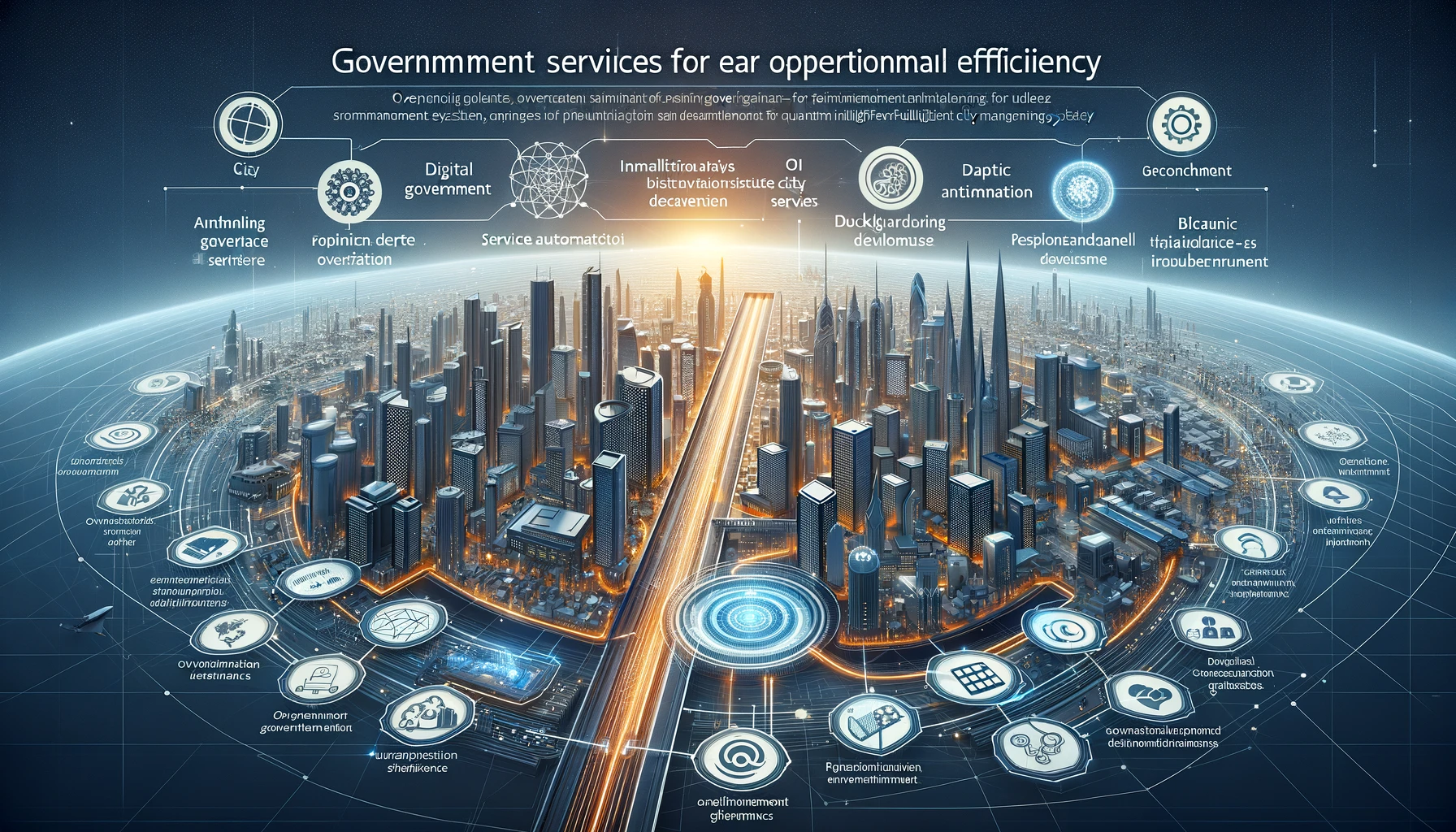
8. Streamlined Government Services: Digitizing government services to make them more accessible and efficient, reducing administrative costs and improving citizen satisfaction.
Image
Here are the wide conceptual diagrams visualizing Streamlined Government Services for Economic and Operational Efficiency, especially in the context of a Quantum Intelligent Futuristic City Management System. These diagrams feature a futuristic cityscape with a focus on the optimization of government services. The designs include elements such as digital government platforms, automated service delivery systems, and data-driven policy development. These technologies are shown as integral to the government's operations, enhancing the efficiency, accessibility, and responsiveness of public services. The use of AI for process automation, blockchain for secure data management, and analytics for informed decision-making is highlighted. The impact of streamlined services on reducing bureaucratic overhead, improving citizen satisfaction, and fostering effective governance is emphasized. The overall design conveys a city that leverages advanced technology to create efficient, transparent, and user-friendly government services, contributing to economic and operational excellence.
Image
9. Energy-Efficient Infrastructure: Investing in energy-efficient buildings and infrastructure to reduce long-term operational costs.
Image
Here are the wide conceptual diagrams visualizing Energy-Efficient Infrastructure for Economic and Operational Efficiency, especially in the context of a Quantum Intelligent Futuristic City Management System. These diagrams depict a futuristic cityscape focusing on energy-efficient infrastructure elements. The designs include aspects like smart energy grids, renewable energy sources, and high-efficiency building designs. These elements are shown as crucial components of the city's infrastructure, contributing to reduced energy consumption and lower operational costs. The integration of technologies such as IoT for energy monitoring, AI for optimizing energy use, and sustainable materials in construction is highlighted. The impact of energy-efficient infrastructure on enhancing the city's overall economic performance and operational efficiency, while also reducing environmental impact, is emphasized. The overall design conveys a city that is committed to sustainable energy practices, leveraging advanced technology to achieve a balance between economic growth and environmental responsibility.
Image
10. Economic Development Initiatives: Fostering economic growth through technology and innovation, attracting businesses and investments, and creating job opportunities.
Image
Here are the wide conceptual diagrams visualizing Economic Development Initiatives for Economic and Operational Efficiency, especially in the context of a Quantum Intelligent Futuristic City Management System. These diagrams depict a futuristic cityscape focusing on initiatives that drive economic development and efficiency. The designs include elements such as innovation hubs, business incubators, and strategic industry clusters. These initiatives are shown as key drivers of economic growth, attracting investments, fostering entrepreneurship, and creating job opportunities. The integration of smart technologies like digital marketplaces, AI-driven business analytics, and advanced communication networks in supporting these initiatives is highlighted. The role of these economic development strategies in enhancing the city's competitiveness, boosting productivity, and ensuring sustainable economic progress is emphasized. The overall design conveys a city that uses innovative approaches and cutting-edge technology to stimulate economic development and operational efficiency, making it an attractive destination for businesses and investors.
Image
11. Performance Monitoring: Continuously monitoring the performance of city services and systems to identify areas for improvement and ensure accountability.
Image
Here are the wide conceptual diagrams visualizing Performance Monitoring for Economic and Operational Efficiency, especially in the context of a Quantum Intelligent Futuristic City Management System. These diagrams feature a futuristic cityscape with an emphasis on performance monitoring systems. The designs include elements such as real-time data dashboards, performance analytics centers, and monitoring networks for various urban services. These systems are shown as integral to the city's operations, providing continuous oversight and analysis to optimize performance. The use of advanced technologies like IoT sensors, AI analytics, and cloud computing in gathering and evaluating performance data is highlighted. The role of these monitoring systems in identifying areas for improvement, ensuring effective resource allocation, and driving operational excellence is emphasized. The overall design conveys a city that utilizes comprehensive performance monitoring to enhance its economic efficiency and operational effectiveness, making it a model for smart urban management.
Image
12. Scalable and Flexible Solutions: Implementing scalable solutions that can adapt to changing city dynamics, ensuring that investments are future-proof and can accommodate growth without disproportionate cost increases.
Image
Here are the wide conceptual diagrams visualizing Scalable and Flexible Solutions for Economic and Operational Efficiency, especially in the context of a Quantum Intelligent Futuristic City Management System. These diagrams depict a futuristic cityscape focusing on the scalability and flexibility of urban solutions. The designs include elements such as modular infrastructure systems, adaptable technology platforms, and dynamic service models. These solutions are shown as capable of scaling up or down based on demand, ensuring that the city remains efficient and responsive to changing needs. The integration of advanced technologies like cloud computing, AI-driven algorithms, and IoT networks that enable this scalability and flexibility is highlighted. The benefits of such solutions in terms of cost-effectiveness, resource optimization, and the ability to quickly adapt to new challenges and opportunities are emphasized. The overall design conveys a city that prioritizes scalable and flexible approaches, using cutting-edge technology to maintain economic and operational efficiency in a dynamic urban environment.

Let's work together